

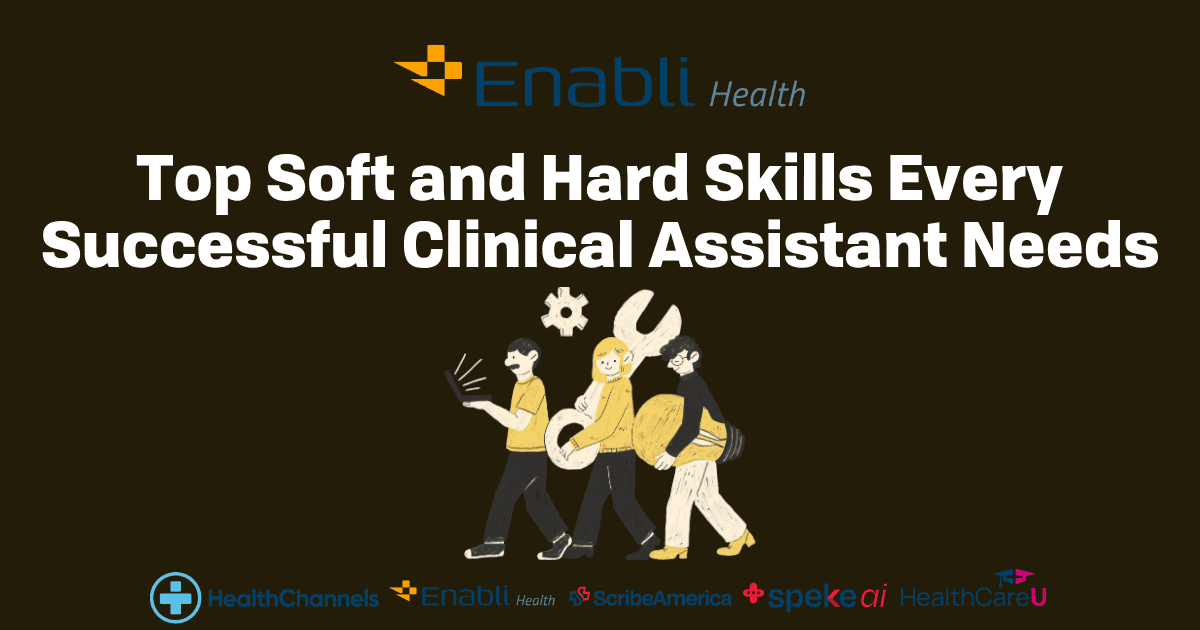


What makes a good clinical assistant? Not a flawless resume, but the right mix of practical ability and people skills. The hard skills listed in a clinical assistant job description, such as taking vitals, charting, and prepping rooms, can be taught in a matter of weeks. The soft skills that keep patients calm and providers supported are what hiring managers watch for first, and they are far harder to fake over a long shift.
Key Takeaways
- The best clinical assistants pair teachable hard skills with the soft skills that keep a busy clinic calm and patients reassured.
- Core hard skills include taking vital signs, documenting in an electronic health record, and understanding basic medical terminology.
- Empathy, clear communication, multitasking, and composure under pressure separate good clinical assistants from great ones.
- Most hard skills are learned on the job, so a resume that highlights reliability and people skills can help secure an entry-level role.
- Enabli Health trains new clinical assistants through paid instruction, so motivation and a willingness to learn matter more than a long resume.
Hard Skills Every Clinical Assistant Uses
Hard skills are the measurable, teachable tasks you perform during a shift. Most clinical assistants take and record vital signs, room patients, document medical histories, and prepare exam rooms and instruments. Depending on the setting and state regulations, you may also draw blood, perform EKGs, or administer injections under a provider's supervision.
Comfort with an electronic health record is now part of the job, since accurate documentation keeps the entire care team aligned. Our guide to what a clinical assistant does lists the duties you can map your experience onto. A working grasp of medical terminology and basic infection control turns a willing beginner into a genuinely useful team member.
Soft Skills That Set You Apart
Soft skills are harder to teach and harder still to fake over a twelve-hour day. Empathy comes first, because patients often meet you when they are anxious, in pain, or unsure of what happens next. The way you greet, listen, and explain shapes their entire visit.
Clear communication keeps providers, nurses, and patients on the same page, while multitasking lets you juggle rooming, charting, and questions without losing track of any. Attention to detail protects patients when you record a dose or a symptom. Composure under pressure is the skill that holds everything together when the waiting room is full, and three providers need you at once.
How to Show These Skills on Your Resume
A strong clinical assistant resume proves your skills with examples rather than adjectives. Instead of listing empathy, describe a customer-facing or caregiving role where you calmed frustrated people or supported someone through a hard moment. Instead of claiming you are organized, point to a job where you managed competing priorities without dropping any of them.
Retail, hospitality, caregiving, and volunteer work all build the people skills this job rewards, so include them and explain what they taught you. If you hold a certification such as CMA or CCMA, list it near the top, but a lack of credentials will not keep you out of an entry-level role.
Skills You Will Build on the Job
You do not need every skill before you start. Reputable employers expect to train new clinical assistants, and the hands-on parts of the role are learned fastest by doing them. Your first week covers clinical workflows, documentation, and patient interaction with support from experienced staff.
Reading about a day in the life of a clinical assistant shows how these skills come together across a single shift. The candidates who grow fastest are the ones who show up curious, ask questions, and treat every patient interaction as practice.
Browse current clinical assistant jobs with Enabli Health and put your people skills to work in a real clinical setting.
Read next: 7 Reasons Why You Should Consider Becoming a Clinical Assistant.