




Key points:
- HIE in healthcare enables secure, real-time sharing of patient records across providers.
- Medical scribes play a crucial role in maintaining accurate data within HIE systems.
- HIE reduces medical errors, unnecessary tests, and speeds up diagnoses and treatments.
- The future of HIE depends on improved security, software integration, and compliance with privacy laws.
In the fast-paced world of medicine, having instant access to patient records can mean the difference between timely treatment and costly delays. That’s where HIE in healthcare comes in. But what is it and why does it matter? Let’s dive in, shall we?
HIE meaning in healthcare
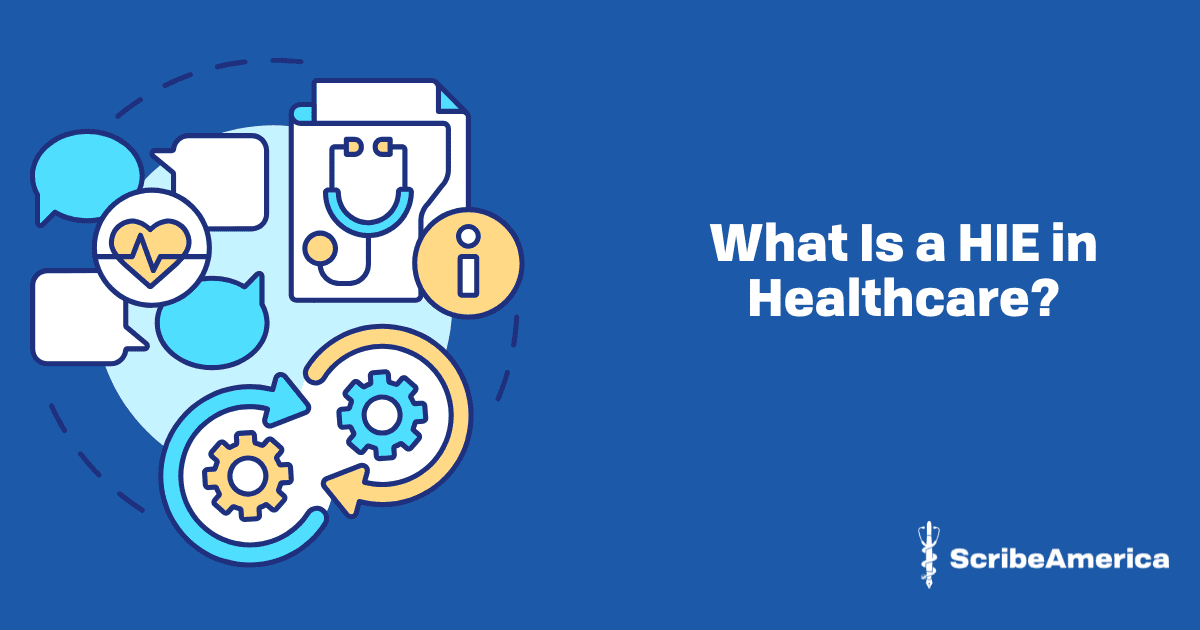
HIE stands for health information exchange. Simply put, it's a system that allows healthcare providers, hospitals, and clinics to securely share patient data in real time. The goal is to ensure that no matter where a patient receives care, their medical history, medications, allergies, and test results are readily available to authorized professionals.
Imagine visiting a specialist in another state - without an HIE, that doctor might not have access to your previous diagnoses or prescriptions. With an HIE, they can quickly pull up your records, reducing redundancy, preventing errors, and ultimately improving patient outcomes.
The role of HIE in modern healthcare
So, what does HIE stand for in healthcare beyond its acronym? At its core, it's about efficiency, safety, and cost reduction. Healthcare providers rely on accurate, up-to-date information to make informed decisions. When data is scattered across different systems, it creates bottlenecks and increases the chances of medical errors.
In a nutshell, HIE in healthcare is a bridge between disconnected records. By allowing seamless communication between different electronic health record (EHR) systems, HIEs help:
- Reduce unnecessary tests and procedures
- Minimize medication errors
- Speed up diagnoses and treatments
- Improve public health tracking by identifying disease patterns
- Empower providers to deliver better care

Medical scribes - the missing piece in effective health information exchange
While technology drives the success of HIEs, human support is still essential. This is where medical scribes come into play. They assist doctors by documenting patient interactions, updating records, and ensuring that the data entered into the system is accurate and comprehensive.
Medical scribes act as the glue between healthcare providers and HIE systems. By meticulously recording patient details, they help maintain organized data. In simpler words, they’re critical for the systems to function smoothly - after all, an HIE is only as good as the information fed into it.
Considering a career as a medical scribe? Explore key medical scribe job requirements.
Challenges and future of HIEs
Despite their benefits, HIEs come with challenges.
- Data security is a major concern since patient information must be protected from cyber threats.
- Not all healthcare facilities use the same software, making integration tricky.
- Ensuring compliance with privacy laws like HIPAA adds another layer of complexity.
- Advances in artificial intelligence are helping HIEs become more secure and easier to connect.
- As healthcare goes digital, HIE systems are expected to become stronger and more accessible globally.
HIE benefits overview
| Benefit | Description |
| Reduced medical errors | Provides accurate, up-to-date patient records to prevent mistakes. |
| Faster diagnoses | Doctors can access historical records instantly for quicker decision-making. |
| Cost efficiency | Minimizes unnecessary tests and procedures, saving time and resources. |
| Improved public health tracking | Identifies disease patterns to better inform healthcare strategies. |
What does HIE stand for in healthcare? The takeaway
So, what is HIE in healthcare, and why should we care? It's the backbone of modern patient data management, ensuring that healthcare professionals have the right information at the right time. By streamlining communication between providers, reducing medical errors, and improving efficiency, HIEs are transforming the way we receive care.
Whether you're a patient, doctor, or medical scribe, embracing HIEs means embracing a smarter, safer, and more connected healthcare system.