




Key points:
- A Patient Care Technician (PCT) is a versatile role combining caregiving with technical tasks like performing EKGs and drawing blood.
- PCTs serve as the essential "eyes and ears" of the medical team, often being the first to notice critical changes in a patient’s condition.
- The role offers a high volume of direct patient contact hours, which is highly valued by medical and PA school admissions committees.
- The path to entry is accessible, typically requiring only a high school diploma followed by a short certificate program or CNA license.
If you’ve ever spent time in a hospital, you might have noticed someone who seems to be everywhere at once, checking monitors, helping a patient walk down the hall, and chatting with nurses while juggling a dozen different tasks. Usually, that person isn't the doctor or the lead nurse; they’re the Patient Care Technician (PCT). If you’re wondering what this role entails or want to break into the medical field, keep reading our comprehensive guide.
Breaking down the patient care technician job description
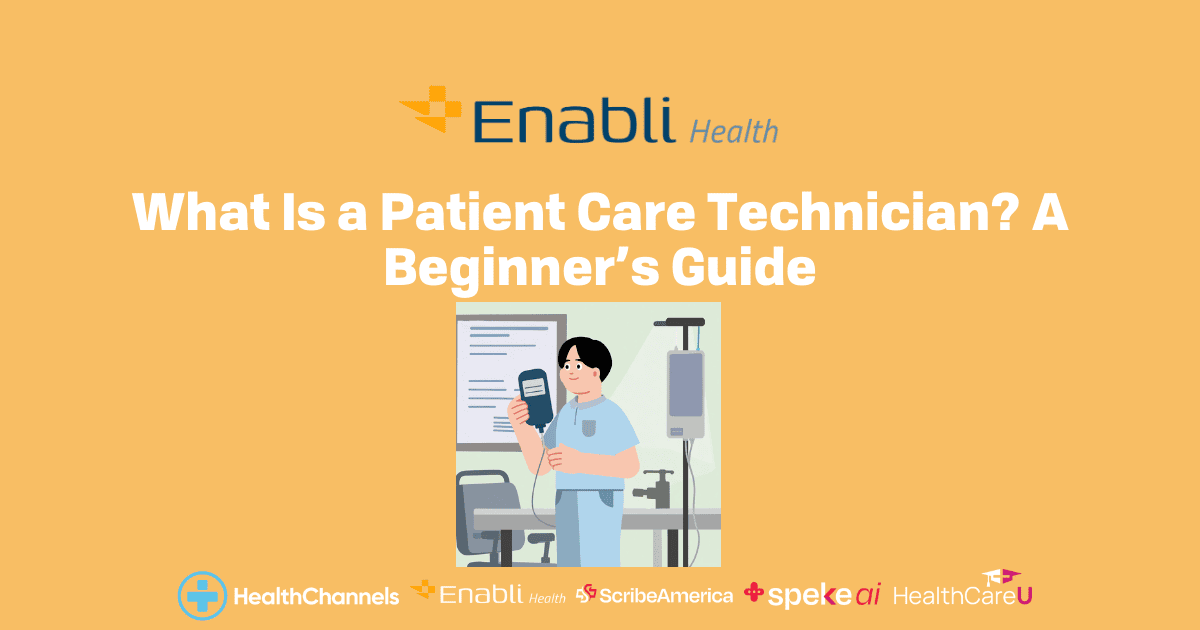
When you look at a standard patient care technician job description, you’ll see it’s a role defined by versatility. A PCT wears many hats – you’re part caregiver, part medical assistant, and part technician. You might spend your morning assisting a patient with their morning routine and your afternoon performing specialized tasks like an EKG or a blood draw.
Because you’re so close to the patient, you’re often the first person to notice when something is slightly "off." If a patient’s breathing changes or they seem more confused than they were an hour ago, you’re the one who sounds the alarm. This makes you an extra set of eyes and ears for the nursing staff, which is why the role is so highly valued in high-pressure environments like the ICU or the Emergency Room.
What does a patient care technician do daily?
If you’re wondering: “What does a patient care technician do?”, the answer is: a little bit of everything. Your day usually starts with a "handoff" from the previous shift, where you learn which patients need the most attention. From there, you’re in constant motion.
Your patient care technician responsibilities include taking vital signs (like blood pressure, heart rate, and temperature) and documenting them in the patient’s chart. You’ll also help with activities of daily living. You might also be responsible for catheter care, wound dressing changes, or even basic phlebotomy. It’s a job that requires both physical stamina and a high level of emotional intelligence.

How to become a patient care technician?
If this sounds like the right fit for you, the next logical question is how to become a patient care technician. The good news is that the barrier to entry is much lower than it is for nursing or medical school, making it a perfect entry-level role for students or career-changers. Most people start by getting their high school diploma and then enrolling in a PCT certificate program.
These programs usually take anywhere from a few months to a year and cover the basics of anatomy, medical terminology, and safety procedures. Many people also get their CNA (Certified Nursing Assistant) license first, as the roles are very similar, though a PCT usually has a broader scope of clinical skills, like performing EKGs or drawing blood.
Why every team needs a great PCT?
By taking care of the essential daily needs of the patients and handling the technical bedside tasks, a PCT allows the doctors and nurses to focus on complex decision-making.
In this job, you aren't just an assistant, you’re a vital member of a team dedicated to enhancing the quality of care. Every vital sign you take and every patient you comfort contributes to the overall success of the hospital. It’s a mission-driven role that gives you a front-row seat to the wonders and challenges of modern medicine. You see people at their most vulnerable, and you get to be the person who makes their day just a little bit easier.
Plus, for those with big dreams of becoming a physician assistant or a doctor, being a PCT provides the kind of direct patient contact hours that admissions committees love. It shows you aren't afraid of the "unglamorous" parts of medicine. You gain a deep respect for every member of the hospital staff, which will make you a much better leader down the road. You’ll understand the workflow of a hospital ward in a way that someone who only shadows can never truly grasp.
The takeaway
Being a Patient Care Technician is one of the most valuable pathways into healthcare. You’ll see the grit, the grace, and everything in between. By understanding what a patient care technician is and stepping into that role, you're building a foundation of clinical knowledge that will serve you for a lifetime.
You’ll walk away from every shift knowing you actually made a difference in someone’s life. If you’re ready to stop reading about medicine and start practicing the heart of it, this is the place to start!