


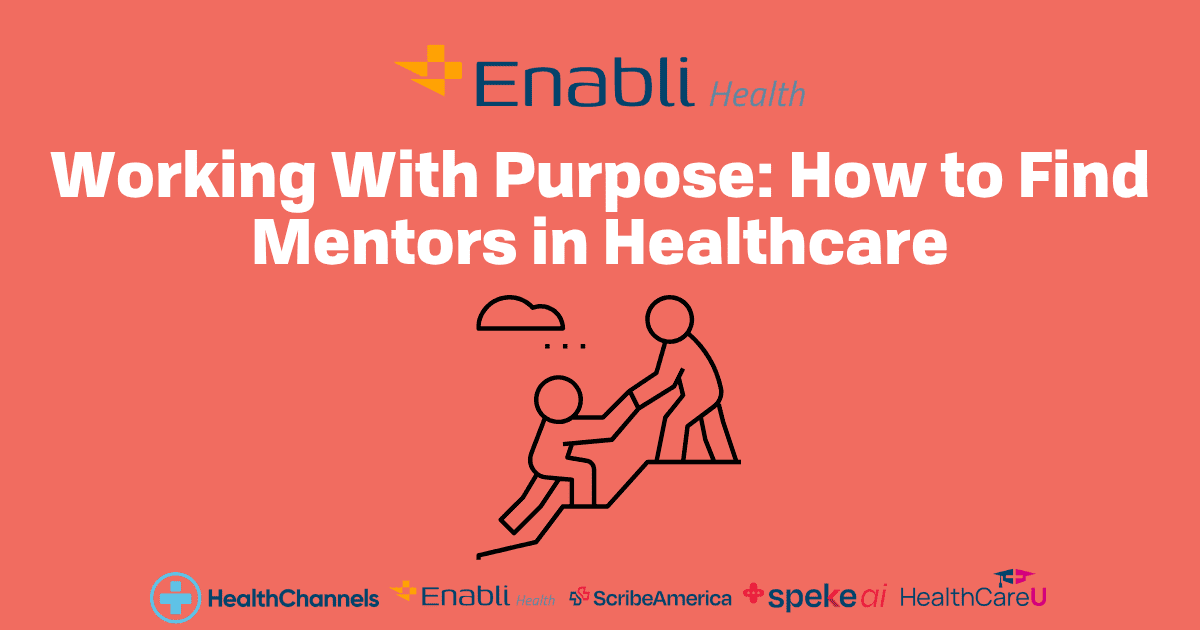


Mentoring in healthcare can compress years of trial and error into a few honest conversations. A good mentor tells you which experience matters, reads your personal statement, and flags the mistakes they made at your stage. Finding that person takes less luck than most people assume, and far more initiative.
Key Takeaways
- Mentoring in healthcare turns ordinary shifts into guided career development.
- Most mentor relationships start informally, with a good question asked at the right moment.
- The clinicians you work beside every day, including physicians, nurses, and PAs, are often willing teachers.
- Coaching and mentoring serve different purposes, and knowing the difference helps you ask for the right kind of support.
What mentoring in healthcare looks like in practice
Examples of mentoring in healthcare rarely resemble a formal program with name tags. An attending explains her reasoning after a difficult case, a charge nurse shows you how he prioritizes a chaotic floor, or a PA describes how she chose her program. None of these moments appears on a schedule, yet each one teaches something a textbook cannot. Mentoring usually hides inside ordinary working relationships long before anyone names it.
These moments compound when you arrive prepared and curious. People invest in learners who visibly apply what they teach, so treat every piece of advice as an assignment. A thank-you message that describes what you changed after a conversation does more than any formal request.
Coaching and mentoring in healthcare: the difference
Coaching and mentoring overlap, but they serve different purposes. A coach works on a defined skill within a set timeframe, such as interview performance or a certification exam. A mentor takes a longer view of your career, your character, and your decisions.
Ask for coaching when you need a skill, and seek mentoring when you need direction. Many clinicians will happily provide both at different moments in your relationship. If your workplace offers structured versions of each, take both.
Where to find a mentor in healthcare
Start where you already are. An entry-level clinical role places you beside experienced clinicians for hours at a time, and shared work builds trust faster than any networking event. Our article on how clinical assistants support doctors and nurses on the floor shows how naturally those relationships form.
Beyond the workplace, check pre-health advising offices, professional associations, alum networks, and hospital volunteer coordinators. Formal mentorship programs exist in most large health systems and cost nothing to join.
Timing matters as much as location. Approach potential mentors during quieter moments, such as the end of a shift or a scheduled break, and never in the middle of patient care. Respecting the rhythm of clinical work is itself a signal that you understand the environment.
How to ask someone to mentor you
Skip the phrase "will you be my mentor," which puts weight on a relationship that has not formed yet. Ask a specific question instead, act on the answer, and report back on what happened. Keep early requests small enough to answer in five minutes. That loop, repeated over weeks, is what mentorship looks like from the inside.
As the relationship matures, the benefits become concrete: honest feedback, introductions, and eventually a detailed letter of support. A mentor who has watched you work can write the kind of letter no professor can. Our guide to securing a strong letter of recommendation from an attending physician covers that step.
Want to work beside potential mentors on every shift? Explore open clinical roles at Enabli Health and turn your next job into an opportunity for guided career development.