




For decades, the medical field has relied on technology to support diagnosis, treatment, and patient communication, but gen AI is taking things to a whole new level. That’s why conversations around generative AI in healthcare are getting louder, and for good reason.
Key Points:
- Generative AI actively transforms healthcare by creating new synthetic data, images, and insights beyond traditional pattern recognition.
- This maturing technology accelerates complex drug discovery, enhances medical imaging analysis, and streamlines daily clinical documentation.
- AI-generated simulations and realistic synthetic datasets are providing safe, scalable grounds for modern medical training and education.
- While artificial intelligence boosts overall clinical efficiency, human expertise and critical thinking remain absolutely essential in patient care.
What makes generative AI special in clinical settings?
Traditional AI in medicine has been about recognition: spotting patterns in X-rays, predicting disease risks from lab results, or recommending treatment pathways. Generative AI goes further. It doesn’t just recognize patterns; it builds on them to produce something new. Think synthetic medical images that can train radiologists without needing real patient scans, or personalized treatment recommendations crafted from mountains of patient data.
This is why the purpose of generative AI in healthcare feels so exciting: it has the potential to accelerate discoveries, reduce administrative burdens, and give both patients and clinicians better tools to work with.
The main benefits of generative AI in healthcare
One of the biggest benefits of generative AI in healthcare is precision. By generating personalized insights from patient data, AI systems can support clinicians in making faster and more accurate decisions. From drug discovery to imaging analysis, the technology reduces guesswork and speeds up research that would otherwise take years.
Finally, generative AI creates new opportunities for training. Imagine a medical student practicing diagnosis on AI-generated cases that are realistic but not tied to actual patient data. It’s a safe, scalable way to build experience.
There are already plenty of generative AI in healthcare examples making waves. Pharmaceutical companies are using AI models to generate potential drug candidates, narrowing down billions of possibilities to a manageable list worth testing in the lab. Many hospitals now actively utilize AI-generated discharge instructions written in plain language tailored to each patient. And radiology departments are training their teams with synthetic medical images to improve diagnostic accuracy.
These examples of generative AI in healthcare show how versatile the technology can be, spanning research, education, and patient care.
What are the key applications of generative AI in healthcare?
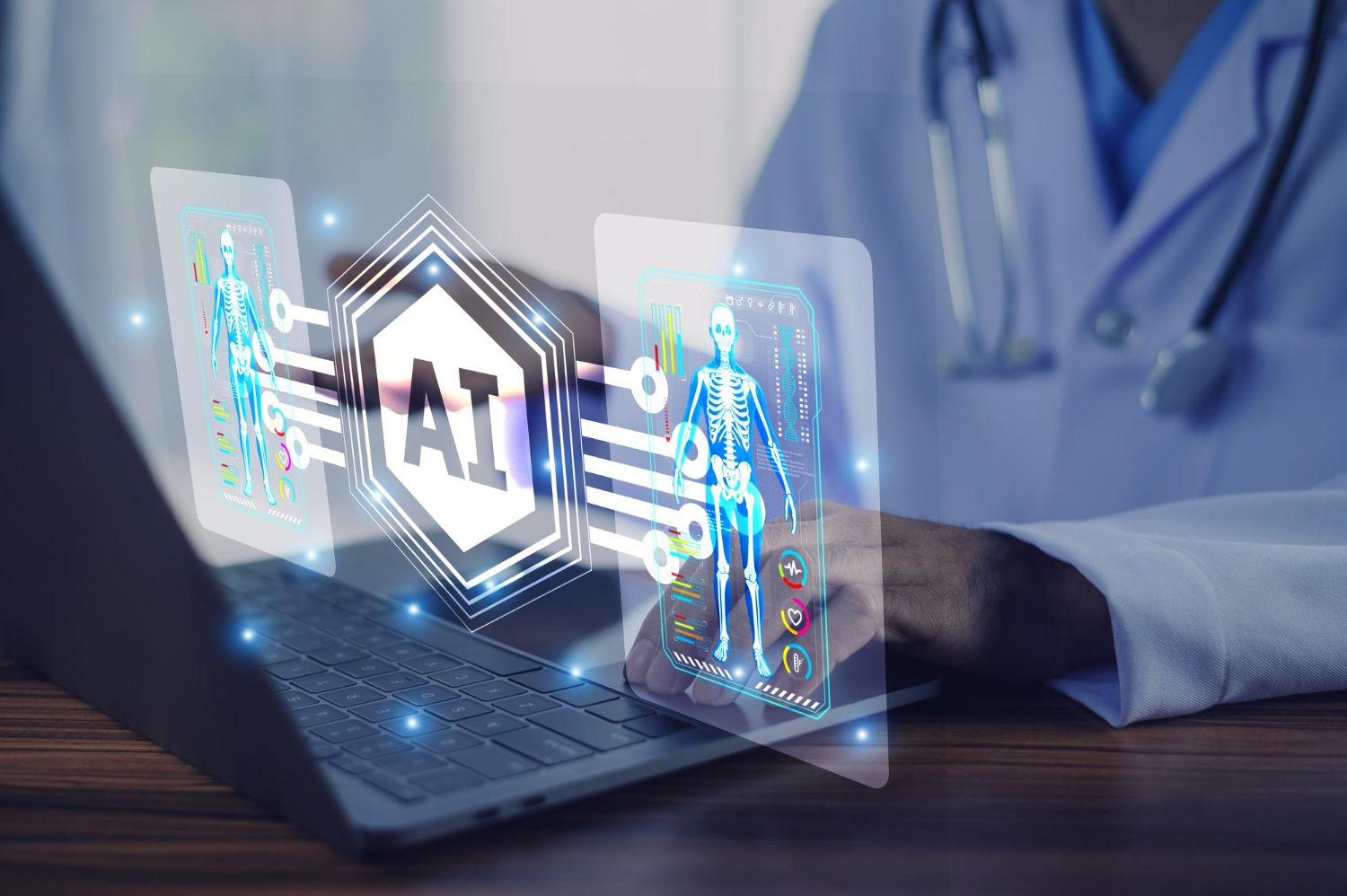
So what are the most promising applications of generative AI in healthcare right now? Some of the most popular ones include:
- Drug discovery: AI can generate novel molecular structures, potentially slashing the time it takes to bring new therapies to market.
- Medical imaging: From enhancing low-quality scans to generating synthetic training data, imaging is one of the top use cases of generative AI in healthcare.
- Clinical documentation: Automated note-taking and patient summaries are some of the most widely implemented generative AI in healthcare use cases.
- Personalized care plans: By analyzing patient data, AI can draft individualized treatment options that clinicians can then refine.
- Education & training: AI-generated case studies, patient simulations, and synthetic datasets provide students and residents with safe practice grounds.
How is the role of generative AI in healthcare evolving?
The generative AI in healthcare industry has matured significantly, transitioning from early experiments into a production reality, though adoption remains uneven across different types of facilities. While major hospital networks are leading the charge, smaller clinics may still be catching up. Instead of separate tools scattered across the system, generative AI is now actively being embedded directly into electronic health records, telehealth platforms, and even bedside monitoring devices.
Patients may receive treatment plans explained in plain English by an AI assistant, while clinicians review the raw data and make final decisions. The use of generative AI in healthcare won’t replace human professionals, but it is already reshaping workflows. The promise is better efficiency, deeper insights, and a smoother patient experience.
For a broader perspective on this technological shift, you can read more about how does AI impact healthcare.
Our final takeaway on AI adoption
The applications of generative AI in healthcare are as wide as they are groundbreaking. From drug discovery pipelines to day-to-day clinical documentation, the technology is proving it can save time, cut costs, and enhance patient outcomes. As the industry continues to evolve and adoption scales across all facility sizes, the future looks like one where doctors, medical scribes, and AI systems work side by side.
You may also like: AI medical scribe vs. human scribe – comparative analysis in healthcare documentation.